
Article Summary
- Most organizations still manage OT and IT environments separately, creating visibility gaps, security risks, and compliance blind spots that grow more dangerous as digital and physical systems become more interconnected.
- A strong OT/IT health strategy requires more than technology. It requires aligned teams, shared governance standards, documented workflows, and measurable operational outcomes tracked over time.
- Organizations do not need to solve everything at once. Starting with asset visibility, monitoring, and communication gaps creates a foundation for incremental improvements that build long-term operational resilience.
Your OT and IT Environments Are More Connected Than You Think
Most organizations draw a clean line between operational technology and information technology. OT handles the physical world: the manufacturing floor, the pipeline controls, the building systems. IT handles the digital world: the networks, the endpoints, the data. In practice, that line has not existed for years.
OT systems are connected to enterprise networks. They are monitored through dashboards that run on IT infrastructure. They generate data that feeds into IT analytics platforms. They are managed, updated, and increasingly targeted by the same threat actors who attack traditional IT environments. The separation is organizational, not technical, and that gap is exactly where risk accumulates.
A practical OT/IT health strategy does not pretend the line still exists. It builds the governance, the team alignment, and the operational visibility that lets modern organizations manage both environments as the interconnected system they actually are.
Why OT/IT Silos Create Operational Risk
The consequences of managing OT and IT separately are not theoretical. They show up in audit findings, incident reports, and outage post-mortems. They show up when a security team discovers an industrial control system connected to the network that nobody registered in the asset inventory. They show up when a patching decision made in IT triggers an unplanned shutdown in OT because nobody checked the operational impact first.
Disconnected environments consistently produce the same categories of risk:
- Visibility gaps that leave OT assets unmonitored and unaccounted for in security programs
- Inconsistent security standards applied to OT environments that were never designed for them
- Shadow infrastructure including AI-driven tools and connected devices that bypass formal procurement and security review
- Delayed incident response when security alerts lack OT context and teams without that context are forced to triage them
- Compliance blind spots when OT systems fall outside the scope of regulatory assessments because ownership was never clearly established
The supply chain attack surface compounds all of these problems. As vendor and partner connections multiply across both IT and OT environments, the boundaries of your risk exposure extend well beyond what either team can see independently. The rise of supply chain attacks makes asset visibility and cross-team coordination more urgent, not less.
A disconnected environment does not stay static. As both OT and IT systems evolve, the gaps between them widen unless someone is actively working to close them.
OT/IT Health Requires Team Alignment, Not Just Technology
The organizations that successfully close OT/IT gaps do not do it by deploying a platform and calling it done. They do it by building the organizational conditions that allow the platform to work.
Strong operational technology health requires active collaboration between five groups that rarely share a table: IT leadership, security teams, OT engineers, compliance stakeholders, and executive leadership. Each of these groups has a different definition of operational health, a different set of priorities, and a different tolerance for risk. Getting them into alignment before a crisis is the work. The technology supports that alignment; it does not create it.
What Alignment Actually Requires
Beyond technology, organizations pursuing OT/IT operational health need to build:
- Governance standards that define how decisions are made across OT and IT boundaries
- Documentation that captures the current state of both environments and the dependencies between them
- Change management processes that require OT impact assessment before IT security decisions are enforced
- Escalation procedures that define who makes the call when uptime and security priorities conflict
- Risk assessments that evaluate both environments together rather than treating them as separate risk domains
- Compliance workflows that account for OT-specific regulatory requirements alongside standard IT frameworks
Measuring Operational Health: What to Track
Operational health is not a feeling. It is a set of measurable outcomes that improve or deteriorate over time based on the decisions your organization makes across OT and IT environments. Tracking these outcomes is how you know whether your strategy is working and where the next investment should go.
Useful metrics for organizations building OT/IT health programs include:
- Downtime reduction: fewer unplanned outages and faster recovery when they occur
- Mean time to detect and respond: how quickly your teams identify and contain incidents across both environments
- Incident frequency: whether the number of security events and operational disruptions is trending up or down
- Compliance readiness: whether your documentation, controls, and evidence would satisfy an audit today
- Asset visibility coverage: the percentage of OT and IT assets that are actively monitored and accounted for
- Operational efficiency improvements: time saved, errors reduced, and workflows streamlined as visibility and coordination improve
Organizations that build OT visibility into their strategy from the start have a significant advantage when it comes to tracking these metrics. You cannot measure what you cannot see.
Compliance and Governance: The Frameworks That Matter
Regulatory pressure on OT environments has increased significantly over the past several years, and the trend is not reversing. Organizations that have treated compliance as an IT-only concern are finding that auditors, insurers, and customers increasingly require evidence of OT security controls alongside traditional IT frameworks.
The compliance landscape for organizations with OT environments typically includes:
- NIST Cybersecurity Framework: the baseline for risk-based security programs across both IT and OT environments
- CMMC: mandatory for defense contractors, with requirements that extend to OT systems supporting covered contracts
- HIPAA: relevant for healthcare organizations where OT systems connect to patient care environments or medical devices
- SOC 2: increasingly required by enterprise customers and partners as evidence of operational security controls
- IEC 62443: the international standard specifically designed for industrial automation and control system security
- Zero Trust: the architectural framework that assumes no user or device is trusted by default, increasingly applied to OT network segmentation and access control
Cyber insurance expectations have become a practical forcing function for many organizations. Underwriters now ask detailed questions about OT asset inventories, network segmentation, and incident response capabilities that span both environments. Organizations without documented OT/IT governance programs are finding coverage harder to obtain and more expensive to maintain.
Zero Trust network access applied to OT environments does not mean treating every system like a hostile endpoint. It means building the access controls and verification requirements that make your environment provably secure to the auditors, insurers, and customers who are asking.
A Practical OT/IT Strategy Starts Small
Organizations navigating OT/IT convergence do not need to solve every problem before they can make progress. The organizations that build lasting operational health are the ones that start somewhere specific and build incrementally rather than waiting for a comprehensive program to materialize all at once.
A practical starting point typically involves:
- Asset visibility: understanding what is on your network, where it is, and who owns it across both environments
- Asset inventory: documenting OT systems in a format that supports both operational management and security review
- Monitoring: establishing baseline visibility into OT network activity so that anomalies are detectable before they become incidents
- Documentation: capturing the current state of OT/IT integration, dependencies, and ownership so that future decisions are made with full context
- High-risk vulnerabilities: identifying and addressing the specific exposures that represent the greatest operational and safety risk before expanding the program
- Communication gaps: establishing the shared language, reporting structures, and escalation paths that allow IT and OT teams to operate as partners rather than separate functions
Why the Right Partner Makes the Difference
OT/IT convergence requires a partner who understands both environments well enough to translate between them. A partner who only knows IT will apply IT frameworks to OT problems and create friction that slows operations. A partner who only knows OT will miss the security and compliance requirements that now apply to industrial environments. The right partner speaks both languages.
Liquid Networx brings managed IT and OT cybersecurity services built for organizations operating at exactly this intersection. Our team helps organizations conduct OT risk assessments, build visibility across both environments, align their teams around shared governance standards, and deploy solutions that improve operational health without disrupting the operations they are designed to protect.
Through our SOC platform and technology partnerships, we provide the visibility, detection, and response capabilities that modern OT/IT environments require, integrated with the organizational and governance work that makes those capabilities sustainable over time.
The goal is not to manage your OT and IT environments for you. It is to help you build the internal capabilities, the team alignment, and the operational foundation that makes your organization genuinely resilient. Choosing the right cybersecurity partner starts with finding one who understands what you are actually building.
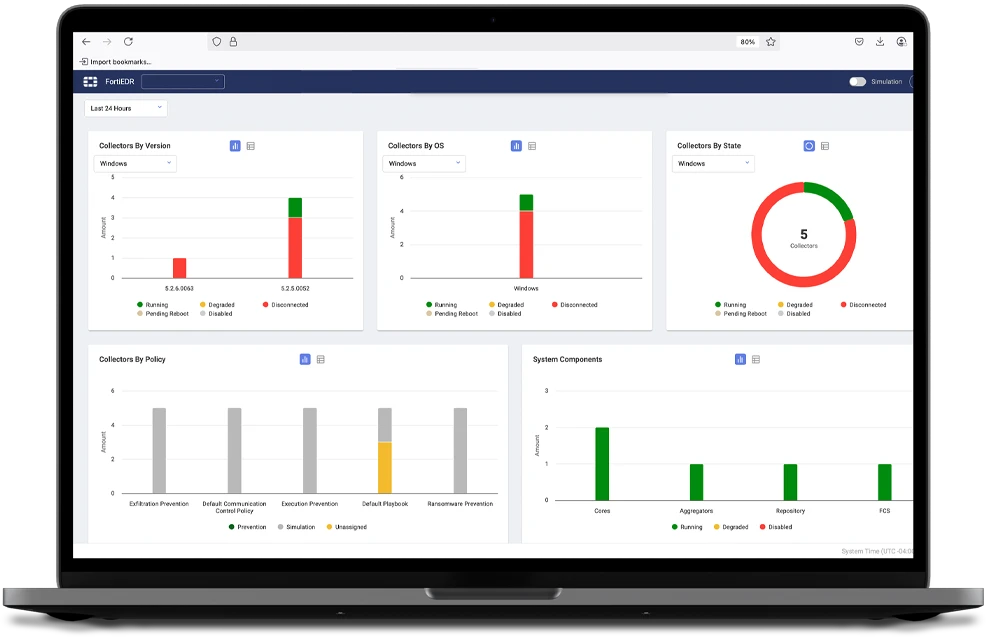
For organizations beginning that process, the integration of EDR into your SOCis one concrete starting point for improving threat visibility across environments before a more comprehensive program is in place.
Incremental progress is real progress. Every visibility gap closed, every asset documented, every escalation path defined brings your organization closer to the operational health that modern IT and OT environments require.
Ready to build a practical OT/IT health strategy for your organization? Talk to the Liquid Networx team about how our IT consulting services and OT cybersecurity expertise can help you close visibility gaps, align your teams, and meet today’s compliance requirements.